
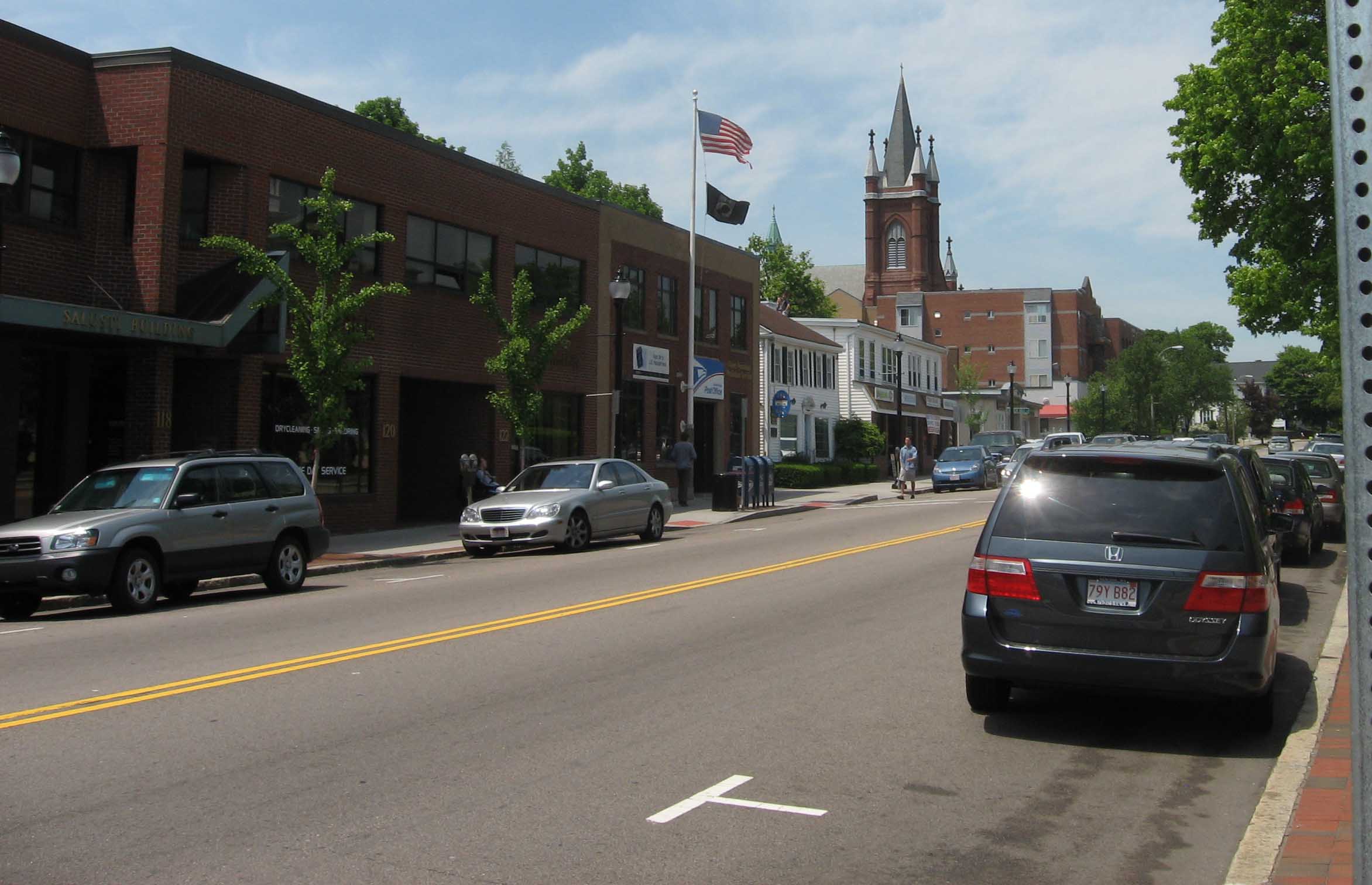
Watertown, Massachusetts: A Community Spotlight on Greater Boston
Watertown sits on the Charles River just 6 miles west of downtown Boston, bordering Cambridge, Belmont, Newton, and Waltham. Once the site of the historic Watertown Arsenal, the city has reinvented itself as an urban-suburban destination known for its biotech corridor, multicultural dining scene, and riverfront greenways that draw commuters and creatives alike.
What Makes Watertown Stand Apart?
Neighborhoods
Watertown is organized around five distinct sections: Watertown Square, the civic and commercial core sitting at the confluence of major bus routes along the Charles River; East Watertown, a dense, walkable area bordering Cambridge with a concentration of two-family homes and proximity to Harvard Square; Coolidge Square, anchored by Mount Auburn Street and lined with Armenian bakeries, independent coffeehouses, and long-standing local businesses; the West End, which has transformed around Arsenal Yards into a modern retail and residential hub alongside Filippello Park and the Charles River Reservation; and Bemis, a quieter residential pocket in the southwest corner bounded by the river and the Waltham city line.
Schools
Watertown is served by Watertown Public Schools, a district of five schools enrolling approximately 2,844 students in grades PK through 12 with a student-to-teacher ratio of 10:1 (Niche, 2026). The district earned an overall Niche grade of B and ranked #113 among Massachusetts school districts in Niche's 2026 Best School Districts ranking. Watertown High School, located at 50 Columbia Street, is rated above average by Niche with a B+ overall grade, enrolls 760 students in grades 9 through 12, and carries a student-to-teacher ratio of 11:1 (Niche, 2026). The Perkins School for the Blind, a globally recognized private institution, is also located within Watertown.
Getting Around
Watertown has no subway station of its own, but MBTA bus routes connect residents directly to the Red Line and Green Line. From Watertown Square, Route 71 runs to Harvard Station (Red Line) via Mount Auburn Street, Route 70 links Waltham through Watertown to Harvard Square and Central Square, and Route 59 connects to Newtonville with a commuter rail transfer. From the MBTA bus yard on Galen Street, Route 57 serves Oak Square and Kenmore Station (Green Line). The Watertown Transportation Management Association (WTMA) also operates a shuttle along Pleasant Street with express service to Harvard Square. By car, the Massachusetts Turnpike (I-90) is minutes away, and Route 128/I-95 is reachable in roughly 5 to 7 minutes, putting downtown Boston approximately a 10-minute drive in off-peak conditions. The Charles River Greenway and local bike lanes make cycling into Cambridge a realistic option for many riders.
Green Space
Watertown's 4-square-mile footprint punches well above its weight in open space. Arsenal Park, a 14-acre riverside park along Greenough Boulevard, offers a skate park, splash pad, basketball courts, bocce, tennis courts, a softball field, soccer field, and a meandering walking and bike path along the Dr. Paul Dudley White Bike Path. The Charles River Greenway, managed by the Massachusetts Department of Conservation and Recreation, runs along the riverbank connecting Watertown to Cambridge and beyond. The city also sits along the Watertown-Cambridge Greenway and the East Coast Greenway, giving cyclists and pedestrians miles of connected trail. Filippello Park anchors the West End with additional recreational space near the river.
Watertown Real Estate: What the Market Looks Like
- Median sale price: $967,000 (March 2026)
- Year over year: up 12.8% (November 2025, Redfin)
- Population: 35,543
- Median household income: $126,265
Sources: Redfin (March 2026 median sale price); U.S. Census Bureau / massachusetts-demographics.com (population and median household income, 2024 ACS estimates)
Who Buys in Watertown?
Watertown draws a highly educated, professionally employed buyer pool: the city's largest resident employment sectors are Professional, Scientific, and Technical Services; Educational Services; and Health Care and Social Assistance (U.S. Census Bureau ACS, 2023 via DataUSA). Buyers frequently include biotech and university workers seeking a shorter Cambridge commute without Cambridge price tags, as well as investors targeting Watertown's deep inventory of early 1900s two-family homes to offset mortgage costs with rental income. The market is competitive: homes sell in roughly 19 days on average and frequently attract multiple offers, particularly for updated single-family properties near the Belmont and Cambridge lines (Redfin, Q1 2026). Surrounded by Newton, Belmont, and Cambridge, Watertown is increasingly seen as the more accessible entry point into the inner-ring suburb tier of Greater Boston.
Thinking About Buying or Selling in Watertown?
Mike Hughes Team knows Watertown inside and out. To talk through your options, call 617-433-9225 or visit mikehughesteam.com.
Where to Eat & What to See
What to See
- Armenian Museum of America : The largest and most comprehensive Armenian museum in the United States, housing more than 20,000 items spanning ancient artifacts, medieval manuscripts, rare books, rugs, and textiles.
65 Main Street, Watertown, MA 02472 - Arsenal Yards : A 250,000-square-foot mixed-use development on the historic Watertown Arsenal campus, anchoring the West End with dining, retail, a cinema, offices, and the adjacent 14-acre Arsenal Park along the Charles River.
485 Arsenal Street, Watertown, MA 02472
Where to Eat
- Buttermilk & Bourbon Watertown : Chef Jason Santos brings a lively New Orleans-inspired menu of buttermilk fried chicken, wood-grilled specialties, and creative cocktails to Arsenal Yards.
100 Arsenal Yard Boulevard, Watertown, MA 02472 - Branch Line : A local Arsenal Street standby offering chef-driven American fare in a warm, neighborhood-focused setting.
321 Arsenal Street, Watertown, MA 02472 - Mighty Squirrel Taproom & Kitchen : A 7,000-square-foot brewery taproom and kitchen situated alongside the Charles River at Arsenal Yards, featuring craft beers and a full food menu.
100 Arsenal Yard Boulevard, Watertown, MA 02472
Community photo: Photo: IFCAR / Public domain (via Wikimedia Commons)